

What to Do When the Church or School Covers Up Child Sexual Abuse
A cover-up usually means the institution learns about suspected abuse and then acts to control the story instead of protecting the child—by delaying a report, discouraging a family from going to police, moving the accused to a new role, or pressuring people to stay quiet. If you sense the adults in charge are managing risk, not safety, treat that as a warning sign.
If you’re reading this, you may be carrying a question that feels impossible to say out loud: “Is the place I trusted trying to protect an adult instead of my child?” Some parents also wonder if they’re overreacting, misunderstanding what happened, or seeing patterns that aren’t there. Others feel the opposite—like the truth is obvious, and nobody with power wants to name it.
I can’t know what brought you here. But I can tell you this: when a church or school circles the wagons, families often feel isolated on purpose. Institutions can make you feel like you’re the problem for asking the most basic question—“Is my child safe?”
If your concern involves a religious setting, you can start by learning how these cases are handled on our page about representing survivors harmed by faith organizations, including patterns we see when leadership tries to contain allegations: religious institution abuse cases.
What Signs Suggest An Institution Is Protecting An Abuser?
Institutions rarely announce a cover-up. More often, you see a cluster of behaviors: leaders insist on “handling it internally,” they minimize what your child says, they refuse to put anything in writing, or they isolate your family from other parents. One red flag alone may not prove anything, but patterns matter.
Here are common warning signs parents describe when a church or school is more focused on self-protection than child safety:
- “Let’s not involve outsiders.” You hear appeals to protect reputations, avoid “drama,” or keep things “in the family.”
- Sudden role changes for the accused. Instead of removing access to children, the person gets “moved,” “reassigned,” or “put on leave” without transparency.
- Pressure to stay quiet. You’re asked not to “ruin someone’s life,” not to “split the congregation,” or not to “harm the school.”
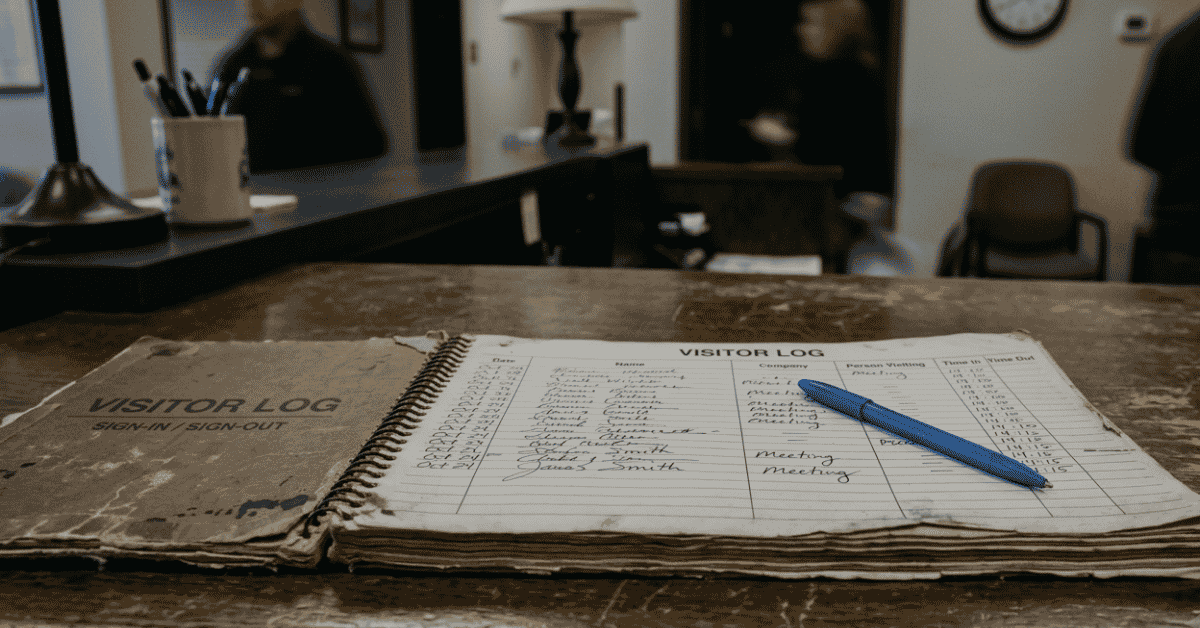
- Missing paper trails. Meetings happen in hallways or phone calls. Emails get vague. Notes “disappear.”
- Blame shifting. Leadership focuses on your child’s behavior, clothing, maturity, or “misunderstanding.”
- Isolation tactics. You’re told not to talk to other parents, teachers, staff, or families.
- Delays. Weeks pass while administrators “look into it,” but your child still has exposure to the accused or to the same environment.
A hard truth: some cover-ups don’t look like a dramatic conspiracy. They look like adults choosing comfort, loyalty, and reputation over clarity and reporting.
What Should I Do First If I Suspect A Cover-Up?
Start with safety, documentation, and outside reporting. Make sure your child has no further contact with the accused, write down what you know while it’s fresh, and report suspected abuse to the proper authorities—not just to the institution. You do not need the institution’s permission to protect your child.
When you’re in the first 24–72 hours, it’s easy to get pulled into meetings, promises, and “process.” Here’s a practical sequence that protects your child and preserves options:
- Create Immediate Separation.
If the accused has any access to your child, end it. That can mean changing classrooms, pulling your child from an activity, insisting on no-contact rules, or stepping away from the environment entirely. Your child’s safety comes before anyone’s schedule. - Write A Timeline.
Use a notes app or a notebook. Record dates, times, names, locations, and the exact words your child used (as closely as you can). Don’t polish it. Don’t rewrite it ten times. Just capture it. - Limit Repeated Questioning.
You can ask gentle, open questions to understand immediate safety (“Are you safe right now?” “Did anyone touch you?”). But repeated interrogations can overwhelm kids and create confusion. If you need more clarity, a child advocacy center or trained interviewer can help. - Stop Relying On Internal “Investigations.”
Internal processes often prioritize liability. If you suspect a cover-up of child sexual abuse, treat internal-only solutions as a risk, not a reassurance.
Who Do I Report To If I Don’t Trust The Institution?
In Arkansas, you can report suspected child maltreatment to the Arkansas Child Abuse Hotline, and you can also contact law enforcement if the child is in immediate danger or you believe a crime occurred. Reporting to the institution alone is not the same as reporting to authorities.
You do not have to “prove” abuse before you report. Reporting exists for situations where you reasonably suspect harm and need trained investigators to step in.
Arkansas’s reporting guidance publicly lists the Child Abuse Hotline numbers as 1-800-482-5964 and 1-844-SAVE-A-CHILD, available 24/7, and advises calling 911 first if a child is in immediate danger.
If the setting is a church, it also matters to know this: Arkansas law includes clergy among mandated reporters in certain circumstances, meaning a clergy member may have a legal duty to notify the hotline when they have reasonable cause to suspect child maltreatment.
What If A School Hid Abuse?
If you believe a school hid abuse, you can still report outside the school, preserve evidence, and seek accountability through administrative complaints and civil claims. Schools have obligations to respond appropriately to sex-based harassment, and they can face consequences when they ignore or minimize risk to students.
Parents often ask some version of: “What if the school knew, and nobody told us?” That question can point to real institutional failures, like a staff member hearing a disclosure and never reporting it, or an administrator downplaying risk to avoid scandal.
Many K–12 schools also have Title IX duties related to responding to reports of sexual harassment. Arkansas Department of Education training materials and U.S. Department of Education summaries describe how notice to a school can trigger a required response under Title IX rules (the details can be fact-specific).
How Do I Protect My Child Emotionally While I Take Action?
Your child needs safety, predictability, and belief. Keep your language simple, avoid making promises you can’t control, and let your child set the pace for talking. Professional trauma-informed counseling can help—but your steady presence matters as much as any resource.
When an institution closes ranks, the emotional harm often doubles. The abuse is one injury. The disbelief, denial, or spin can feel like a second wound.
Here’s what helps many kids in the moment:
- Use validating phrases without leading. “I’m glad you told me.” “You did nothing wrong.” “My job is to keep you safe.”
- Keep routines where you can. Predictable meals, school pickup, bedtime—those rhythms tell a child the world didn’t collapse.
- Avoid forcing forgiveness or “closure.” If anyone pushes you toward “moving on,” remember: healing does not require silence.
- Choose one or two safe adults. Too many “helpers” can feel like a crowd. Build a small circle you trust.
If you’re coping with your own shock, anger, or grief, you’re not “ruining” anything by feeling it. You’re responding to harm. Your child doesn’t need you to be emotionless. They need you to be steady.
What Evidence Should I Preserve Without Putting My Child Through More?
Preserve what already exists: texts, emails, incident reports, rosters, schedules, photos of relevant locations, and your own timeline notes. Avoid making your child repeat details for “documentation.” Your role is to save records and protect your child; investigators and clinicians can handle formal interviewing.
Evidence often lives in ordinary places:
- Emails with school administrators, pastors, or staff
- Text messages between adults involved
- Social media messages (including deleted threads—take screenshots)
- Attendance logs, volunteer lists, youth group rosters, coaching schedules
- Security footage requests (ask quickly; some systems overwrite)
- Written policies about supervision, reporting, background checks, and discipline
- Names of witnesses or other families who raised concerns
Also document what the institution does after you raise the concern:
- Who they told you to contact (or not contact)
- Whether they offered meetings but refused written follow-up
- Any attempts to restrict access to records
- Any retaliation—subtle or open
If you can, communicate in writing. If you must meet in person, follow up with an email summary: “To confirm what we discussed today…” That paper trail can matter later.
Who Can Be Held Legally Responsible For A Cover-Up?
Liability can extend beyond the individual abuser. Depending on the facts, the institution itself may face claims for negligent supervision, negligent retention, failure to report, and other forms of wrongdoing tied to allowing access to children or ignoring warnings. The specific theory depends on what the institution knew and what it did—or failed to do—after learning it.
Accountability isn’t only about punishment. It’s often about truth and prevention. Civil claims can force disclosure of internal communications, prior complaints, and policy failures that kept children exposed.
Parents sometimes worry they’ll look “vindictive” for asking questions. But when institutions hide abuse, silence can leave other kids exposed. Seeking answers can be an act of protection.
Can I Take Legal Action Against A Church Or School?
Yes—many families can pursue civil legal action when an institution’s choices contributed to abuse or its concealment. A lawsuit can seek compensation, uncover internal records, and demand accountability for unsafe policies and decision-making. The right path depends on the details, including timelines, evidence, and how the institution responded once concerns surfaced.
This is where a lot of families get stuck, because institutions speak in soft language:
“We take this seriously.”
“We’re cooperating.”
“We’re conducting a review.”
But the real questions are concrete:
- Did they report?
- Did they remove access to children?
- Did they warn parents?
- Did they preserve records?
- Did they retaliate against the family who spoke up?
If the abuse involved a denomination with known institutional patterns, it may help to speak with counsel familiar with those structures and their internal processes. You can read more about representation connected to the Southern Baptist context here: Southern Baptist abuse claims.
If you’re wondering whether you can sue a school for a cover-up, the same core principle applies: when an institution’s negligence or intentional concealment plays a role, civil law may provide a route to accountability. What you can prove—and what the institution will fight—often comes down to records and timelines.
What If The Abuse Happened Years Ago?
Many survivors and families still have legal options even when the abuse occurred decades ago. In Arkansas, the answer depends on when the survivor turned 21, how the harm was discovered, and how current challenges to the law are resolved. Because these issues are highly fact-specific, a case-by-case legal review matters.
For claims moving forward, Arkansas eliminated the statute of limitations for civil child sexual abuse cases under the Justice for Vulnerable Victims of Sexual Abuse Act, which took effect on July 28, 2021. That means there is no civil filing deadline for survivors who were under 21 years old on that date (often described as those born on or after July 28, 2000).
For survivors who were already over 21 when the law took effect, the analysis is different. Their ability to file may depend on two potential paths:
- Delayed discovery, where the survivor could not reasonably have understood the abuse or its impact earlier, or
- A revival window, which is currently the subject of litigation before the Arkansas Supreme Court. Whether that window ultimately allows additional claims remains unresolved.
Because of this uncertainty, survivors in their 40s or 50s may still be able to pursue a case—but timing and legal strategy matter. Waiting for clarity can risk losing options, which is why early legal guidance is important even when the abuse feels far in the past.
For adults harmed in church settings years ago, these questions often surface alongside familiar institutional patterns: quiet transfers, reputation management, and pressure not to “cause trouble.” In many cases, the issue is not only what happened to one child, but what leadership knew—or failed to act on—over time.
When Should I Talk With A Lawyer About An Institutional Cover-Up?
Talk with a lawyer as soon as you suspect the institution is managing liability instead of child safety—especially if you’re facing pressure, retaliation, or confusing “internal processes.” Early legal guidance can help you avoid common traps, preserve evidence, and communicate in a way that protects your child and your rights.
Here are moments that should trigger a legal consult:
- The institution asks you to sign anything (an “agreement,” a “statement,” a “confidentiality” form)
- Leadership discourages you from reporting externally
- They offer money, tuition credits, counseling funds, or “support” tied to silence
- They refuse to tell you whether they made a hotline report
- They say the accused “resigned” but won’t confirm restrictions
- You learn of other families with similar concerns
- The accused still has access to kids in any capacity
You don’t have to decide today whether you want a lawsuit. A consult can focus on options, safety, and next steps—without forcing you into a choice you’re not ready to make.
If you want to read a survivor-centered perspective on what it feels like to speak up inside a powerful institution, this may resonate: speaking up isn’t the problem.
One more thing I want to say plainly: if a school environment is involved, you’re not “making it worse” by insisting on outside reporting and independent accountability. Sexual abuse of children in a school setting can escalate once administrators start protecting themselves. Your steady, documented action can help stop that.
If you’re facing this right now, consider writing down three names tonight: the person you can call for emotional support, the agency you can report to, and the lawyer you can consult for a plan. You deserve a path that protects your child and respects the truth.
Get social