

Assemblies of God Sexual Abuse Evidence: How Survivors Build a Civil Case Against a Church
I hear the same sentence from survivors more often than any other. “I don’t have proof.”
It usually comes out quietly, almost as an apology, before the person has finished telling me what happened to them. They have already ruled themselves out. In their mind, a case requires a photograph, a recording, or a witness who saw everything and wrote it down that night.
That picture of how these cases work is wrong. In a civil lawsuit against a church, the evidence that carries the most weight is almost never in the survivor’s possession. It sits in personnel folders, board minutes, district correspondence, and email archives inside the institution itself. Getting it out is my job, not yours. If you are weighing civil claims against religious institutions in Arkansas, the useful question is not what you saved. It is what they wrote down.
What a Civil Case Against a Church Has to Establish
A civil claim tied to abuse inside an Assemblies of God congregation usually runs on two tracks at once, and people confuse them constantly.
The first track is the abuse itself. What happened, who did it, when and where it occurred.
The second track is the institutional failure wrapped around it. Did the church, the district, or an affiliated ministry do something, or fail to do something, that gave an adult access to a child? Did anyone receive a warning and file it away? Was a minister moved instead of reported? Was a background inquiry skipped? Was a complaint handled internally by people with an interest in keeping it internal?
Those two tracks call for different evidence. Your memory and your account carry the first. Institutional records carry the second. A case can be strong on the second track even when the first rests entirely on testimony, and that combination is far more common than most survivors imagine.
Your Account Is Evidence, Not a Substitute for It
Let me be blunt about something the legal system communicates poorly.
Sworn testimony is evidence. It is not a weaker stand-in for the real thing. It is admitted, weighed, and relied on by juries in every category of civil litigation, and it decides cases every week in courtrooms across this state.
What strengthens testimony is not a bystander who saw it happen. It is detail. The layout of the room. The smell of the building. What was playing on the radio. What you were wearing. What he said before and what he said after. The route home. Sensory anchors that a person could not invent and would have no reason to invent.
Consistency matters more than completeness. Survivors often fear that gaps in memory will sink them. Gaps are normal. Trauma does not record events the way a security camera does. It preserves fragments with unusual sharpness and blurs the connective tissue between them. A defense lawyer who tries to turn a gap into a weapon is arguing against how memory works under threat, and that argument can be answered with expert testimony.
The people you told matter too. A spouse you confided in at thirty-four. A friend from youth group. A counselor. A sibling who noticed you stopped going to church that summer. Those conversations, even decades later, become corroborating testimony. Journals, letters, therapy records, and old messages carry the same weight. You do not need all of it. You need to tell your lawyer it exists.
The Paper Trail Most Survivors Never Knew Existed
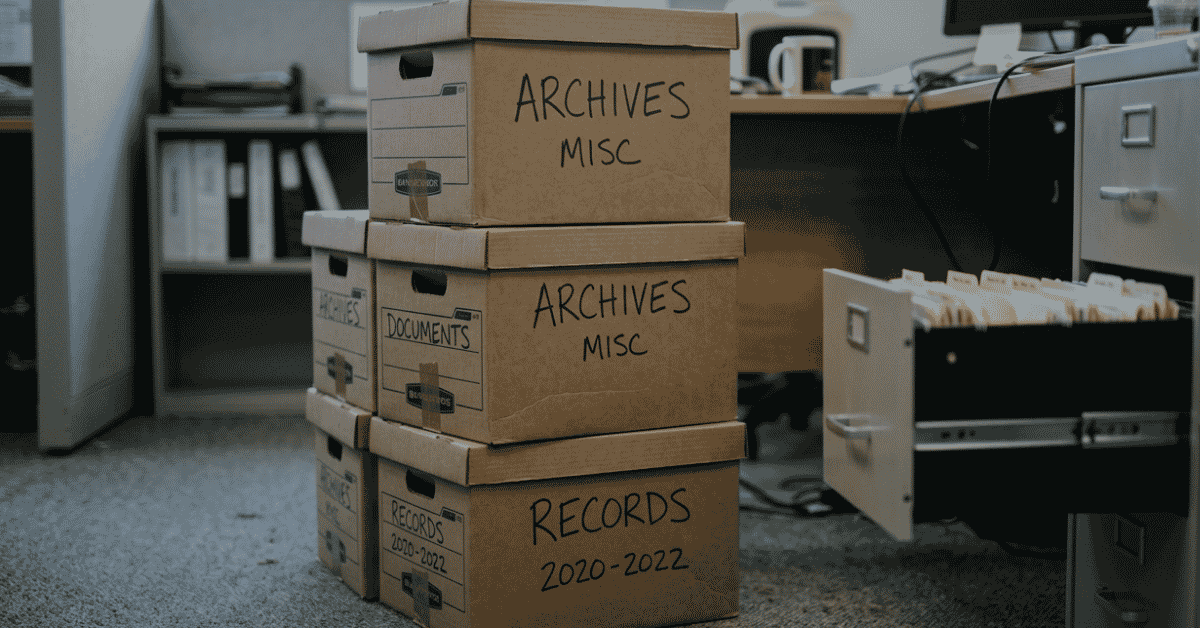
Churches keep records. Denominations keep more.
Assemblies of God congregations operate inside a structure that generates documentation at several levels, and the categories below exist as a matter of ordinary institutional practice.
Personnel and credentialing files. Ministers hold credentials issued and renewed through district and national processes. Those files can contain applications, renewals, disciplinary history, restrictions, suspensions, and correspondence explaining why a credential status changed.
Complaint intake records. When someone raises concerns about a minister, that report frequently generates paper. An intake note. An email chain. A referral. A summary written by whoever fielded the call.
Board and business meeting minutes. Church boards document personnel decisions. A resignation, a leave of absence, a sudden reassignment, or a vote to release a staff member often appears in minutes using language that reveals far more in hindsight than it did at the time.
District correspondence. Letters and emails between a local congregation and district leadership can show what was reported upward and how leadership responded once it arrived.
Employment and volunteer files. Applications, references, background check results, training acknowledgments, and signed policy receipts establish what screening actually occurred and what standards the institution had adopted for itself.
Insurance notices. Institutions notify their carriers when they anticipate a claim. The date on that notice can establish when the organization understood it had a problem.
Counseling and referral records. Some institutions route complaints toward internal counseling rather than law enforcement. That routing leaves a trail.
You will not have any of these documents. You are not supposed to. They belong to the institution, which is precisely why litigation exists.
How Those Records Actually Get Pulled Out
Discovery is the mechanism. Once a lawsuit is filed, the defendant carries legal obligations to produce responsive documents, answer written questions under oath, and sit for depositions.
A preservation letter often goes out before any of that. It puts the institution on notice that relevant records must be retained, which matters because routine destruction schedules can otherwise erase material that would have mattered.
Subpoenas reach third parties. The district office. An affiliated school or camp. A former employer. A background check vendor. An insurance carrier.
Depositions put people under oath. Pastors, board members, district officials, staff who were present at the time. Sworn answers get compared against the documents, and against each other. The gaps between the two often say more than either one alone.
Requests for admission force the other side to concede or contest particular facts in writing, on the record.
This is the part that changes cases. A survivor who walked in believing they had nothing frequently ends up holding a file of internal records no one outside that church had ever read. If you want to understand how these claims get built before you call anyone, start with Assemblies of God abuse lawsuits and what they typically involve.
Prior Complaints and the Question of Notice
The phrase that decides many church cases is prior notice.
If an institution knew or should have known that an adult posed a danger to children and kept that adult in a position of access anyway, the analysis shifts. The claim stops being only about one person’s conduct and becomes a question about the organization’s choices.
Notice takes several forms. An earlier complaint from another family. A rumor documented in an email. A restriction placed on a minister’s credential. A prior arrest. A resignation under circumstances that were quietly papered over. A transfer to another congregation with no disclosure to the receiving church.
Other survivors matter here as well. When one person comes forward about a minister, others often follow. A pattern involving the same individual across years or across congregations is powerful proof that the risk was foreseeable, and foreseeability is frequently the fight.
A lawsuit filed in Arkansas naming Refuge Church of the Assemblies of God and the Arkansas District Council alleges failures in how reports were handled and how a minister was supervised, according to the filed complaint. Those allegations remain allegations, and the case will be decided on the record developed in court. What the filing illustrates is the shape of the argument survivors and their attorneys are making: what did the institution know, when did it know it, and what did it do next.
Mandatory Reporting Failures and How They Surface
Arkansas law requires certain adults, including clergy and many church employees who work with children, to report suspected child maltreatment to the state hotline. That duty exists independent of any internal church policy.
Failure to report leaves marks. The absence of a hotline report during a stretch of time when someone inside the church plainly knew something is itself documentary. Records from the Arkansas Department of Human Services and from law enforcement can be requested and laid beside internal church timelines.
When a complaint moved through a congregation’s internal process and never reached the state, that contrast supports claims about how the institution ranked its own reputation against a child’s safety. Training records showing that staff were instructed on their reporting duties, sitting next to an absence of any report, tightens the argument considerably.
Time Passing Does Not End the Analysis
Most people who contact me about childhood abuse are adults now, often decades removed from what happened. They assume the door closed a long time ago.
Arkansas law recognizes that survivors frequently do not connect their adult injuries to childhood abuse until much later in life. Delayed discovery principles account for that reality, and they carry no age cutoff. The question involves when a survivor knew or reasonably should have known that their injuries were caused by the abuse.
Timing rules are technical and fact-driven, and nothing written for a general audience should be treated as an answer for your situation. This overview of time limits on child molestation claims in Arkansas walks through the framework in more depth. The practical point is simpler than the doctrine: do not rule yourself out on your own. That call requires a lawyer looking at your facts.
What You Need Before You Pick Up the Phone
Nothing.
You do not need documents. You do not need a police report. You do not need to have told anyone before. You do not need the exact year, the full name of every person involved, or a clean chronological narrative.
A first conversation is mostly listening. I ask what you remember, who was involved, roughly when it happened, which congregation or ministry was connected to it, and who you may have told along the way. That is enough for me to evaluate whether a claim exists and which records would need to be pursued.
You control the pace. Nothing gets filed because you made a phone call. Plenty of people talk to me once, sit with it for months, and come back later. Others never file at all and simply wanted someone with legal training to tell them that what happened was not their fault and was not ordinary.
How Far Up the Chain Accountability Can Reach
Survivors often assume a case ends with the person who hurt them, or with the single building where it happened. It frequently does not.
Denominational bodies, district councils, affiliated schools, and camps can carry legal exposure when the record supports it. Establishing that reach depends on governance documents, credentialing authority, supervisory relationships, and financial ties, all of which get pulled during discovery and tested in depositions.
Our firm was the first to obtain a significant monetary settlement from the Catholic Church in Arkansas, and that work shaped the approach we bring to claims against other religious institutions across the state.
If you are asking whether an organization above the local church can be held responsible for what happened to you, read what it takes to name a denomination as a defendant and then call us. Consultations are confidential and cost nothing. You do not need evidence in hand. You need someone whose job is to go find it.
Get social