

Residential Treatment Facility Abuse Lawsuits in Arkansas: How These Cases Are Built and What Compensation May Be Available
Nine times out of ten, the first five minutes of every call I take about something that happened at a residential treatment facility sound something like this.
They’re going to say I lied. They knew I was trouble when I got there. I was a kid no one believed, and that place is going to say I made it up.
I hear it from fifty-year-olds and from parents who got the call three weeks ago. I get it, and it’s usually not how these cases get proven.
Because facilities aren’t houses or cars or offices or empty rooms where two people happened to be alone. They’re licensed businesses that generate paperwork, and odds are somebody working there wrote a good deal of it down while it was happening. Cases involving sexual abuse at a residential treatment facility get built out of their paperwork.
Which is why the whole job is getting to that paper before it disappears.
Before You File
A lawsuit doesn’t begin with paperwork at all. The first thing that happens when you call my office is a long conversation where I’m asking you for dates and names and buildings and unit assignments and who else lived on the hall, because everything I’ll later request from them is organized by date and by unit, not by what happened. If a survivor gives me the month and the wing they stayed on, I know more than I would from one who can only remember the year. Most survivors surprise themselves by how much comes back once I sit down and walk them through it.
What I send first depends on what you tell me, but it’s almost always a preservation letter. It’s notice to the facility and its corporate parents that this is going to be litigation, and that they can’t destroy anything touching that time period, including records scheduled for routine destruction. Preservation matters more here than in most cases, because these institutions rotate their records on a schedule and video tends to be overwritten quickly. If something disappears after they get a preservation letter, the destruction itself becomes part of the case, since a court can instruct the jury to assume the missing document would have hurt that party. The record nobody can produce can end up doing more damage than the record itself would have.
Another thing that sounds like paperwork but isn’t. What company actually owned and operated that facility on that date? One of my first calls after yours goes to figuring out exactly who was running it at the time, because these places get sold and renamed and restructured. The name over the front door when you were fourteen might not be who owned the building, and it might not exist anymore. Sorting that out before you file is how you identify who you actually sue, because naming the wrong company can leave you in court for months against a shell with no money.
You can also get some of what I want before any pleadings get filed. The state agency that licenses these places inspects them, takes complaints, and maintains a file on every facility, and part of that file is something I can request before filing suit. That’s often how I learn a facility got cited for staff shortages the month you were there, or that somebody complained about the same person two years before you arrived.
What You Should Know About Records from a Treatment Facility
Facilities like these generate paperwork constantly, for purposes that usually have nothing to do with a lawsuit. Licensing requires it. Insurers require it. Billing requires it. The result is that any given facility holds a record of its own staffing, its own incidents, and its own trouble with employees, kept as part of running the business long before anybody thinks about litigation.
That tech left alone on a hall with nobody else on night shift? There’s a shift schedule and a staffing log for that night, and if the place was shorthanded, the paperwork says so.
Incident reports are the category people underestimate most. Facilities write them for fights and injuries and kids running off and restraints and allegations of all kinds, and the person filling one out isn’t thinking about a jury. A report describing a child as agitated and refusing to go back to a particular staff member’s unit reads very differently in a courtroom than it did to whoever signed it. And a report where a child told a staff member what happened doesn’t stop existing because nobody believed it at the time.
Clients have told me they spent thirty years thinking the reason nobody came when they told was that it hadn’t really happened, and then sat across from me while I read them a line out of one of those reports, written by an employee, on the night in question, describing what they said. Word for word.
Personnel files are another story entirely, holding hiring paperwork, disciplinary notices, previous complaints, and why somebody left. Why they left is the part that matters. Move somebody to another unit quietly instead of reporting him and that decision tells a story in his own file, and sending a known offender to a new unit without telling anyone there can form the basis for negligent supervision.
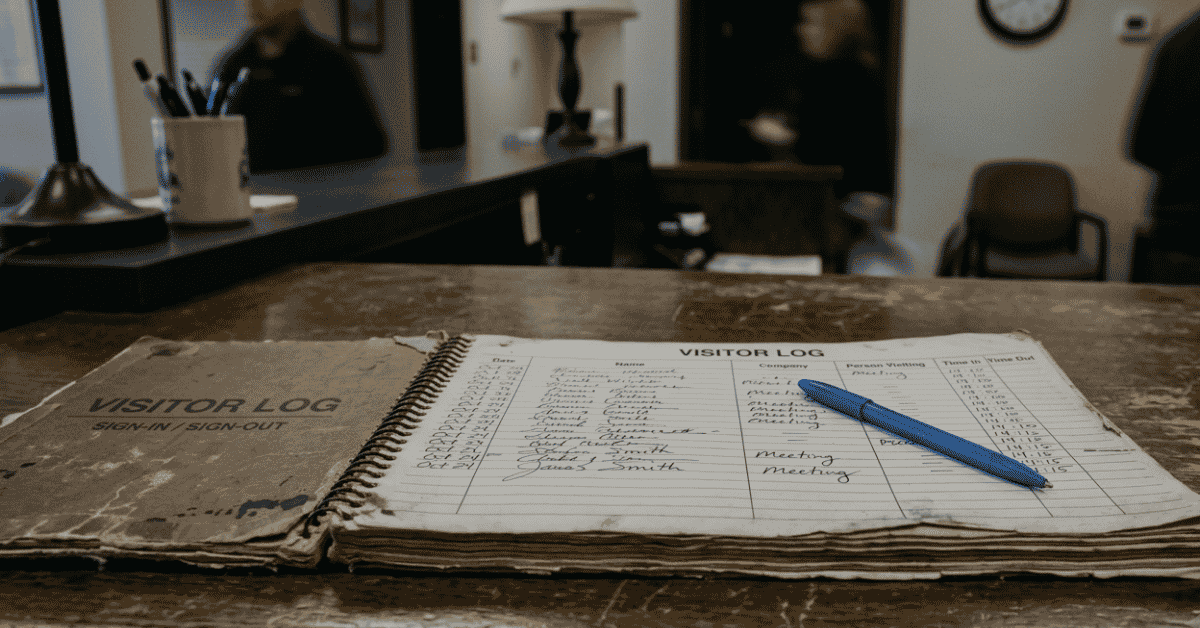
Then there’s the material nobody counts as evidence. Sign-in and visitor logs. Medication records showing which kid got what and when, phone logs, mail logs, and the therapy notes generated during your stay. Most of that only comes through discovery, once a lawsuit is filed and I start sending requests.
None of which means a case can’t succeed without it. Arkansas doesn’t require medical records or a police report to file a civil lawsuit, and plenty of cases get proven through sworn testimony alone. Cases decades old get proven through testimony, records, witnesses, and patterns that show up across more than one survivor. Documentation makes the work easier, but it has never been a requirement.
Who Gets Sued
A lawsuit under Arkansas law is its own animal, independent of whatever criminal authorities decided to do or not do. Prosecutors may have chosen not to file, or they may have filed and lost. The person may be dead, or serving a sentence right now. None of that closes the civil door.
Survivors can name the individual who committed the abuse. They can name the facility, and often the company above it. Arkansas allows all responsible parties to be named in the same lawsuit rather than forcing separate ones.
Say a background check would have turned up a prior allegation, and the facility never ran one, or ran it and hired him anyway. That’s the shape of a negligent hiring claim. Same employee, facility learns something after the hire and keeps him on the floor anyway? That one’s negligent retention.
Negligent supervision isn’t a claim about the person who committed the abuse, it’s a claim about the facility and whether it used reasonable care over who it left in charge of children. The conditions are consistent from one place to the next: a locked building, kids with histories that make them easy to discredit, and adults with unsupervised access at night.
Failure to report belongs in the same family. Staff at these facilities are mandated reporters under Arkansas law. When somebody was told and didn’t report it, and more kids were hurt afterward, that failure can support a negligence claim. Same thing if the facility knew and nobody was warned, or if they concealed what they knew and the concealment allowed more abuse to happen.
Facility ownership matters too, because plenty of these places are part of larger companies running facilities in multiple states. Some have litigation histories, and when they do, that record becomes part of what we look into. We keep a separate page on claims against Perimeter Healthcare.
That said, having a defendant we can name is not the same thing as having a case against that defendant. Whether a facility or parent company can be held liable depends on the records of what that company knew and when.
Potential Damages in Arkansas
Figuring out what a case is worth is a conversation in itself, and the honest answer is that I can’t tell you until I know your story. What I can tell you is what kind of damages Arkansas law allows you to recover.
Survivors can recover economic damages, which is a legal way of saying the costs attached to what happened. Medical expenses, therapy already paid for and therapy still ahead of you, hospitalization, and lost wages where the abuse cost you the ability to work or study and left you earning less. For somebody in his forties who has been in and out of treatment since he was a teenager, the future care number is often larger than anything already spent.
Non-economic damages are what the law calls pain and suffering and mental anguish. Everything that doesn’t come with a receipt: the years of it, what it did to your relationships, what it took from you when you should have been doing something else with your childhood. Arkansas recognizes these damages and doesn’t treat them as an afterthought.
Punitive damages work differently, since they aren’t based on your losses at all. They become available when a defendant’s conduct was malicious or showed conscious indifference, which usually involves an institution that was told and did nothing. Their purpose is to punish a defendant, not to compensate a survivor.
Arkansas hasn’t written a statutory cap for claims like these.
Separate from filing suit, the Arkansas Crime Victims Reparations Board can help with some therapy and medical costs.
Why Would You Settle? Why Would You Go to Trial?
You have a right to a trial by jury, and some of these cases do go to trial. Most don’t, and why they settle or don’t has some rhyme and reason to it.
Insurance plays a far bigger role than a lot of people realize. These facilities carry liability coverage, which means that when a claim comes in, the insurer generally appoints the lawyers handling the defense and negotiates within the limits of the policy, so the practical shape of the negotiation is often set by a document written years before anybody was hurt. In cases that resolve for larger amounts, structured settlements are common, meaning payment spread over time instead of one check.
The paper trail matters here as much as anywhere. A facility with an incident report from the week in question, a personnel file showing prior complaints, and a licensing citation from the same period sits in a very different posture than one where there’s almost nothing left to find.
They do fight these cases, and the argument I hear most is some version of the reason you were sent there in the first place. The kid had behavioral problems. There’s a history of lying in the file. Whatever diagnosis he came in with gets offered up as a reason not to believe him. That argument tends to come apart against the facility’s own documents, because the institution questioning your credibility now is the same institution that wrote down what its staff was doing at the time.
Bankruptcy is always a possibility when you name a facility or its parent company, and it doesn’t necessarily end things. Claims can move forward through the bankruptcy process and, in some situations, through a trust set up to pay victims.
Most of these run somewhere in the range of twelve to twenty-four months. Two things drive that: how much discovery is involved, and whether the case settles. Cases get filed in circuit court, usually where the abuse happened or where one of the parties lives. Federal court is an option when there are federal claims in play. When they settle, it’s usually confidential, subject to the court’s approval.
The last question I get on almost every first call is about privacy, and it’s a fair one. Protective orders are standard in these cases, and in many of them the survivor proceeds by initials rather than a full name, particularly where a minor is involved. Filing a lawsuit doesn’t mean you trade your privacy for the right to sue.
It May Not Be Too Late to Sue
If you were under twenty-one on July 28, 2021, meaning you were born on or after July 28, 2000, there is no statute of limitations in Arkansas on a civil child sexual abuse claim. The clock doesn’t run at all for that group.
Everyone else looks to what’s known as the delayed discovery rule. Three years from when you discovered the psychological effects of the abuse, not three years from when the abuse happened. Plenty of people don’t connect what happened to them at fifteen with the panic attacks they went to a doctor about last year, until a therapist walks them into it. That moment of recognition is where the rule starts counting.
Your claim could still be timely, no matter how long ago the abuse occurred. Speak with an attorney to find out.
And if you never told anyone at the time, that’s ordinary, and it doesn’t get held against you the way you’d expect. I’ve written separately about why disclosure is so rare in these settings.
Typically Covered During That First Conversation
When you first call, I’ll ask where you were, roughly when, the name of the facility, and whether you remember any of the staff. If you’re not comfortable describing what happened beyond that the first time, you don’t have to, and most people aren’t.
Assuming the timing is there, I can tell you whether the facility still exists under that name, who owns it now, and what records I think we can realistically obtain. Calling me doesn’t cost you anything and doesn’t obligate you to do anything else.
If you want a sense of who has already come forward, I’ve written about who is filing these cases in Arkansas right now.
Those records don’t sit there forever. Whatever the timing looks like in your situation, the paper is a great deal easier to get while it still exists.
Get social